


Cognitive Biblical Therapy Coursework
Cognitive Biblical Therapy Coursework
Counseling People through God’s Transforming Word
Cognitive Biblical Therapy (CBT) is a structured, five-phase counseling methodology derived exclusively from the Bible. Unlike secular counseling, which often focuses on self-sufficiency, CBT is designed to help individuals restore their relationship with God by aligning their thoughts and behaviors with Scriptural truths.
As a means to pass on his development of Cognitive Biblical Therapy, in 1990 the Lord led Dr. Daniel Wilkinson, to create a six part coursework. Recording his teaching on cassette tapes and using the forms he created earlier in his dissertation, Dr. Wilkinson was able to pass on to others, what the Lord had taught and shown him in counseling those He sent to him.
Dr. Wilkinson has since passed into eternity, passing CBT’s methodology and coursework on to others. Only until the last years of digital innovation has his wife Gayle been able to redesign the coursework for counselors like you, to be trained to help those God sends to you.
All Scripture is breathed out by God and profitable for teaching, for reproof, for correction, and for training in righteousness, that the man of God may be complete, equipped for every good work. 2 Timothy 3:16 & 17
Hear from Dr. Wilkinson about Cognitive Biblical Therapy’s coursework, recorded in 1994.
Cognitive Biblical Therapy can be learned through five courses plus a sixth mentoring course, that are designed to effectively train individuals in a step-by-step method of Biblical counseling. Although courses in psychology are helpful in relating to other professionals and understanding human behavior, they are not absolute prerequisites to learning Cognitive Biblical Therapy. Counselors trained in CBT are encouraged to maintain a network of professionals within the fields of Clinical Psychology, Psychiatry, Law, Education and Medicine for referrals or consultation as needed.
Six courses are divided up into 56 chapters plus practicum, focusing on learning, understanding and practicing the 5 Phases of CBT: Analysis, Biblical Norms, Ownership, Application and Maturity. Each course walks you through every phase of counseling, showing you how to apply Cognitive Biblical Therapy concepts. You will learn to identify challenging behaviors, navigate difficult relationships, and utilize specific therapeutic strategies. The links below will give you an overview of all the courses and terms.
Cognitive Biblical Therapy Coursework
Cognitive Biblical Therapy Coursework FAQs
If you have any questions, reach out to us:
cbtcoursework@gmail.com.
The coursework has been updated, digitized and
navigation friendly.
-
Cognitive Biblical Therapy (CBT) is a structured, five-phase counseling methodology derived exclusively from the Bible. Unlike secular counseling, which often focuses on self-sufficiency, CBT is designed to help individuals restore their relationship with God by aligning their thoughts and behaviors with Scriptural truths.
It operates on the belief that the 66 books of the Old and New Testaments contain everything necessary to develop and maintain a healthy mind.
The Five-Phase Process
CBT moves through a specific sequence to ensure that change is deep and lasting:
Analysis: This phase involves identifying the root of distress. Instead of just looking at symptoms, the counselor helps the individual analyze their behavior and relationships against the standard of Agape love (as defined in 1 Corinthians 13).
Biblical Norms: Once the problem is identified, the focus shifts to discovering God’s specific standards for behavior. This is done through careful study of the original meaning of Biblical texts to find practical "norms" for living.
Ownership: This is the turning point of the process. The individual acknowledges their own contribution to the problem and makes a volitional choice to submit to God’s authority rather than continuing in old patterns of independence or disobedience.
Application: Here, the individual begins to apply Biblical principles to their specific life challenges—whether that involves reconciling a marriage, managing workplace conflict, or overcoming a crisis. A key tool used here is the Patience Process, which teaches how to pause impulsive reactions and respond with prayerful self-analysis.
Maturity: The ultimate goal is for the individual to become spiritually independent. Counseling ends when the person has transferred their dependence from the counselor to the Holy Spirit and the Word of God, enabling them to handle future challenges on their own.
How It Differs from Other Approaches
Purely Scriptural: CBT rejects "integrationism," which is the practice of mixing secular psychology with the Bible. It relies solely on the authority of Scripture and the power of the Holy Spirit.
Focus on the Soul: While secular therapy often views humans as basically good and focuses on self-esteem, CBT identifies the root of dysfunction as a distortion of love and a need for a restored relationship with the Creator.
Structured Accountability: It is not just "giving advice." It is a clinical, step-by-step process that uses objective Biblical standards to measure progress and ensure accountability.
In short, Cognitive Biblical Therapy is a way to "reason together" with God, replacing personal distortions with His truth to achieve genuine emotional and spiritual stability.
-
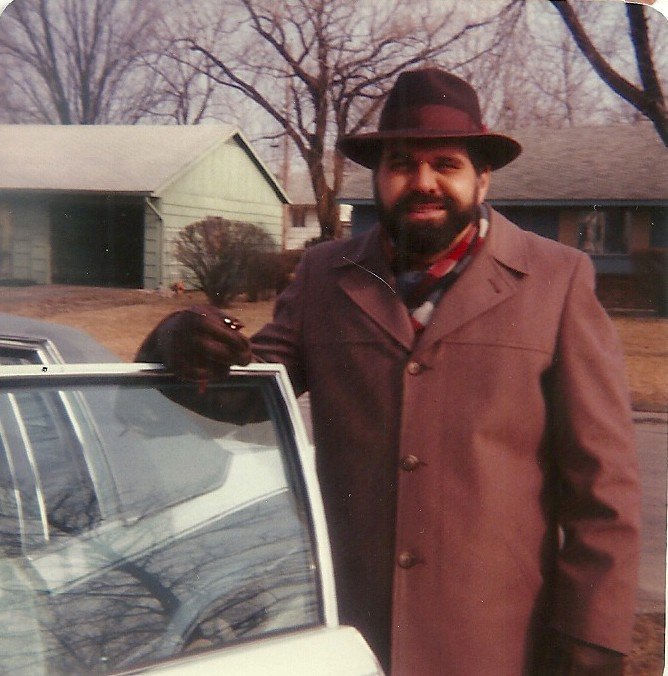
Dr. Daniel Wilkinson is the developer of Cognitive Biblical Therapy (CBT). In the mid 1990s, he created this approach as a response to modern counseling methods that he felt often ignored the eternal soul and the importance of a person's relationship with God.
Here are a few key things to know about his background and why he started this work:
A Practical Foundation
Dr. Wilkinson didn't just create a theory; he developed CBT through four years of direct clinical research. He worked with over 2,000 people from many different backgrounds to see how Biblical principles could practically solve real-life problems. His goal was to move counseling away from just talking about symptoms and toward finding objective, scriptural solutions.
Rooted in Scripture
He spent a lot of time doing deep "word studies" in the original Greek and Hebrew languages of the Bible. He specifically focused on the 15 attributes of Agape love found in 1 Corinthians 13. By doing this, he was able to create a clear "silhouette" of how a healthy, God-dependent person should actually behave in their relationships and daily life.
The Goal of Independence
One of the most important parts of Dr. Wilkinson’s work is the idea of "transfer of dependence." He believed that a counselor shouldn't be a permanent crutch. Instead, his method is designed to teach people how to depend on the Holy Spirit and the Bible so they can handle life's challenges on their own.
-
In the first six years of practicing CBT among trans denominational church settings in Champaign, Illinois, Dr. Wilkinson tracked client outcomes, while addressing presenting problems ranging from marital conflict and parenting difficulties to spiritual struggle, child molestation, bulimia, and addiction. The measured outcomes found success rates of 78% for marital counseling, 86% for spiritual counseling, 83% for coping with life, and 81% for parenting.
Dr. Wilkinson’s early reported outcomes are presented as findings from practical application rather than as the product of a controlled empirical study, which are reported limitations. Yet through his continued practice, training and supervision of certified and licensed counselors, CBT outcomes have been replicated beyond his earthly life.
Today, Cognitive Biblical Counseling is intended to grow through CBT coursework training, and ongoing practical application. Rather than being viewed as a static or finished clinical model, it serves as a framework for continual development within church, parachurch, and private practice counseling ministries.
-
One - Introducing CBT and the Initial Session of Counseling - The student learns in the basic processes of intake, evaluation and dialogue with the client. Direction is given for presenting CBT to the client as a means for gaining hope and insight to solving the presenting problem.
Two – Fundamentals of Data Collection - The student receives an explanation of the structure and principles that undergird all of the counseling forms and processes which support the steps of CBT.
Three – Analysis and Application of Cognitive Biblical Therapy - The student experiences an in-depth study of Agape love found in I Corinthians 13:4-8, instruction in four basic personality types, explanation of the conditions which require referral to other professionals (medical, legal, psychiatric), and a discussion of Biblical coping mechanisms and concepts of God from early childhood and adolescent experiences.
Four – Application of Cognitive Biblical Therapy to Specific Problems - In this course the student learns to analyze the results from Biblically based questionnaires, identify personalities and their behavioral patterns in given situations and to apply CBT to each presenting problem. Course four is also designed to be used as a reference library.
Five – Cognitive Biblical Therapy Practicum - Students have the option to complete practicum hours with an approved Cognitive Biblical Therapy instructor for mentoring purposes. Practicum requirements include administrative functions as well as counseling sessions. This course includes observing counseling sessions and counseling with observation by a professional CBT counselor.
Six – Building and Maintaining Your Private Practice - The Biblical Christian Counseling Ministries, Inc. has developed a unique process and philosophy for establishing a private practice. This course teaches the process of establishing a counseling practice in either a church or a private practice setting. This course has sample contracts and other materials.