


Who We Are
Our History
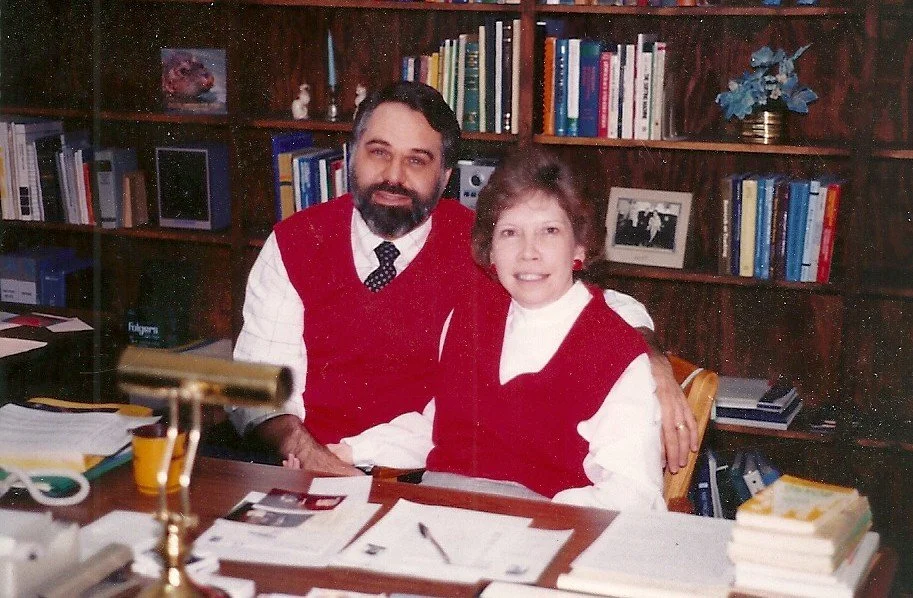
Cognitive Biblical Therapy(CBT) is a counseling methodology and coursework certification program under the Biblical Christian Counseling Ministry. Dr. Wilkinson’s early years in ministry trained 15 professional and lay counselors, which continued into the early 2000s even after he passed away in 1997. Since the technology advancement in the last 5 years, Dr. Wilkinson’s wife Gayle, has picked up the CBT Coursework and has digitized it with the help of certified CBT professional counselors.
Gayle writes, “About 8 years ago, the Lord asked me to make CBT available to Christian counselors. I gathered documents from an old ministry computer, located hard copies of materials and over the next few years, I transferred Dan’s lectures from cassettes to audio files. Only recently, did I discover a quality program to transcribe the audio files to text. Over the past year I have been editing those transcriptions. Dan’s first student agreed to assist me in updating the information in those transcriptions to make them useful to those wishing to learn a Biblical method for counseling. I established a new BCCM non-profit and established a new Board of Directors.”
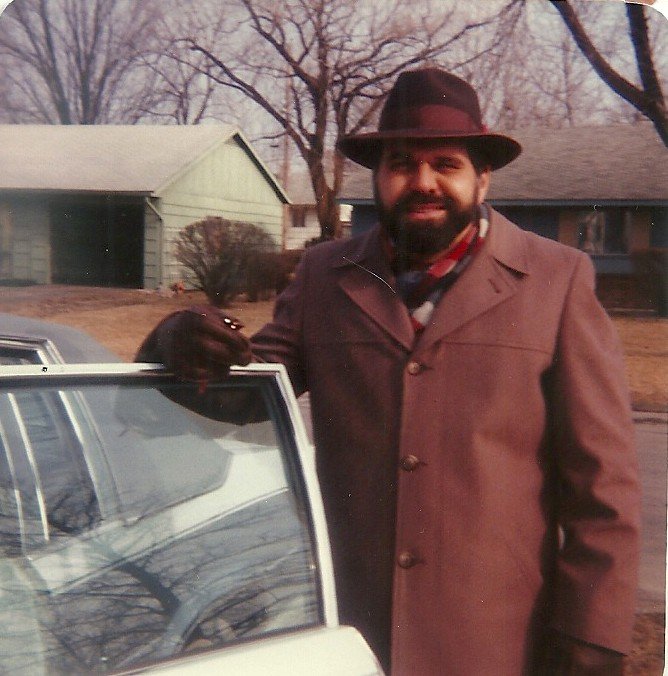
Dan shares in his story, “When I was thirty my choices caught up with me. The choice to live within these fears and false coping mechanisms had robbed me of my money, my health, my mental stability and my desire to live. I was homeless, penniless, hopeless, addicted to substances, and living the life of a renegade.”
Dan turned to God when looking a

Who We Are
Hear from Dr. Wilkinson about Cognitive Biblical Therapy’s coursework, recorded in 1994.
Cognitive Biblical Therapy can be learned through five courses plus a sixth mentoring course, that are designed to effectively train individuals in a step-by-step method of Biblical counseling. Although courses in psychology are helpful in relating to other professionals and understanding human behavior, they are not absolute prerequisites to learning Cognitive Biblical Therapy. Counselors trained in CBT are encouraged to maintain a network of professionals within the fields of Clinical Psychology, Psychiatry, Law, Education and Medicine for referrals or consultation as needed.
Six courses are divided up into 56 chapters plus practicum, focusing on learning, understanding and practicing the 5 Phases of CBT: Analysis, Biblical Norms, Ownership, Application and Maturity. Each course walks you through every phase of counseling, showing you how to apply Cognitive Biblical Therapy concepts. You will learn to identify challenging behaviors, navigate difficult relationships, and utilize specific therapeutic strategies. The links below will give you an overview of all the courses and terms.
Cognitive Biblical Therapy Coursework
Cognitive Biblical Therapy Coursework FAQs
If you have any questions, reach out to us:
cbtcoursework@gmail.com.
The coursework has been updated, digitized and
navigation friendly.
-
Cognitive Biblical Therapy (CBT) is a structured, five-phase counseling methodology derived exclusively from the Bible. Unlike secular counseling, which often focuses on self-sufficiency, CBT is designed to help individuals restore their relationship with God by aligning their thoughts and behaviors with Scriptural truths.
It operates on the belief that the 66 books of the Old and New Testaments contain everything necessary to develop and maintain a healthy mind.
The Five-Phase Process
CBT moves through a specific sequence to ensure that change is deep and lasting:
Analysis: This phase involves identifying the root of distress. Instead of just looking at symptoms, the counselor helps the individual analyze their behavior and relationships against the standard of Agape love (as defined in 1 Corinthians 13).
Biblical Norms: Once the problem is identified, the focus shifts to discovering God’s specific standards for behavior. This is done through careful study of the original meaning of Biblical texts to find practical "norms" for living.
Ownership: This is the turning point of the process. The individual acknowledges their own contribution to the problem and makes a volitional choice to submit to God’s authority rather than continuing in old patterns of independence or disobedience.
Application: Here, the individual begins to apply Biblical principles to their specific life challenges—whether that involves reconciling a marriage, managing workplace conflict, or overcoming a crisis. A key tool used here is the Patience Process, which teaches how to pause impulsive reactions and respond with prayerful self-analysis.
Maturity: The ultimate goal is for the individual to become spiritually independent. Counseling ends when the person has transferred their dependence from the counselor to the Holy Spirit and the Word of God, enabling them to handle future challenges on their own.
How It Differs from Other Approaches
Purely Scriptural: CBT rejects "integrationism," which is the practice of mixing secular psychology with the Bible. It relies solely on the authority of Scripture and the power of the Holy Spirit.
Focus on the Soul: While secular therapy often views humans as basically good and focuses on self-esteem, CBT identifies the root of dysfunction as a distortion of love and a need for a restored relationship with the Creator.
Structured Accountability: It is not just "giving advice." It is a clinical, step-by-step process that uses objective Biblical standards to measure progress and ensure accountability.
In short, Cognitive Biblical Therapy is a way to "reason together" with God, replacing personal distortions with His truth to achieve genuine emotional and spiritual stability.
-
Dr. Daniel Wilkinson is the developer of Cognitive Biblical Therapy (CBT). In the mid 1990s, he created this approach as a response to modern counseling methods that he felt often ignored the eternal soul and the importance of a person's relationship with God.
Here are a few key things to know about his background and why he started this work:
A Practical Foundation
Dr. Wilkinson didn't just create a theory; he developed CBT through four years of direct clinical research. He worked with over 2,000 people from many different backgrounds to see how Biblical principles could practically solve real-life problems. His goal was to move counseling away from just talking about symptoms and toward finding objective, scriptural solutions.
Rooted in Scripture
He spent a lot of time doing deep "word studies" in the original Greek and Hebrew languages of the Bible. He specifically focused on the 15 attributes of Agape love found in 1 Corinthians 13. By doing this, he was able to create a clear "silhouette" of how a healthy, God-dependent person should actually behave in their relationships and daily life.
The Goal of Independence
One of the most important parts of Dr. Wilkinson’s work is the idea of "transfer of dependence." He believed that a counselor shouldn't be a permanent crutch. Instead, his method is designed to teach people how to depend on the Holy Spirit and the Bible so they can handle life's challenges on their own.
-
In the first six years of practicing CBT among trans denominational church settings in Champaign, Illinois, Dr. Wilkinson tracked client outcomes, while addressing presenting problems ranging from marital conflict and parenting difficulties to spiritual struggle, child molestation, bulimia, and addiction. The measured outcomes found success rates of 78% for marital counseling, 86% for spiritual counseling, 83% for coping with life, and 81% for parenting.
Dr. Wilkinson’s early reported outcomes are presented as findings from practical application rather than as the product of a controlled empirical study, which are reported limitations. Yet through his continued practice, training and supervision of certified and licensed counselors, CBT outcomes have been replicated beyond his earthly life.
Today, Cognitive Biblical Counseling is intended to grow through CBT coursework training, and ongoing practical application. Rather than being viewed as a static or finished clinical model, it serves as a framework for continual development within church, parachurch, and private practice counseling ministries.
-
One - Introducing CBT and the Initial Session of Counseling - The student learns in the basic processes of intake, evaluation and dialogue with the client. Direction is given for presenting CBT to the client as a means for gaining hope and insight to solving the presenting problem.
Two – Fundamentals of Data Collection - The student receives an explanation of the structure and principles that undergird all of the counseling forms and processes which support the steps of CBT.
Three – Analysis and Application of Cognitive Biblical Therapy - The student experiences an in-depth study of Agape love found in I Corinthians 13:4-8, instruction in four basic personality types, explanation of the conditions which require referral to other professionals (medical, legal, psychiatric), and a discussion of Biblical coping mechanisms and concepts of God from early childhood and adolescent experiences.
Four – Application of Cognitive Biblical Therapy to Specific Problems - In this course the student learns to analyze the results from Biblically based questionnaires, identify personalities and their behavioral patterns in given situations and to apply CBT to each presenting problem. Course four is also designed to be used as a reference library.
Five – Cognitive Biblical Therapy Practicum - Students have the option to complete practicum hours with an approved Cognitive Biblical Therapy instructor for mentoring purposes. Practicum requirements include administrative functions as well as counseling sessions. This course includes observing counseling sessions and counseling with observation by a professional CBT counselor.
Six – Building and Maintaining Your Private Practice - The Biblical Christian Counseling Ministries, Inc. has developed a unique process and philosophy for establishing a private practice. This course teaches the process of establishing a counseling practice in either a church or a private practice setting. This course has sample contracts and other materials.
Who we are
What is BCCM? Past? Present?
Past Mission and Purpose
Stories
Past Pictures
Who we are now


-
Biblical counseling is needed because humanity's deepest problem is not merely emotional dysfunction or faulty thinking, but sin and separation from God — a reality secular systems are not equipped to fully address. Scripture is viewed as living, authoritative, and fully sufficient to restore the soul, impart wisdom, and guide individuals toward lasting transformation. Unlike secular models that rely on human reasoning, self-actualization, or behavioral modification, biblical counseling treats God's Word as the controlling authority for understanding suffering, relationships, and spiritual change. Genuine healing requires not symptom management but redemption through Jesus Christ and ongoing sanctification through the Holy Spirit. Biblical counseling is ultimately a ministry of hope, proclaiming the sufficiency of Christ for forgiveness, restoration, wisdom, and transformation.
-
Purely Scriptural: CBT rejects "integrationism," which is the practice of mixing secular psychology with the Bible. It relies solely on the authority of Scripture and the power of the Holy Spirit.
Focus on the Soul: While secular therapy often views humans as basically good and focuses on self-esteem, CBT identifies the root of dysfunction as a distortion of love and a need for a restored relationship with the Creator.
Structured Accountability: It is not just "giving advice." It is a clinical, step-by-step process that uses objective Biblical standards to measure progress and ensure accountability.
-
Most modern therapies are built on the idea that humans are basically good and just need to "discover themselves" or manage their symptoms. Biblical counseling starts from a different place. It recognizes that we were created by God, and because He designed us, His Word is the ultimate manual for how our minds and hearts are supposed to function.
Why it’s different
There are a few key reasons why this approach stands apart from secular or "mixed" counseling:
The Source of Truth: Instead of relying on ever-changing human theories, it uses the Bible as the sufficient source for understanding why we struggle and how we can change.
Addressing the Root: Secular counseling often focuses on feeling better or changing your environment. Biblical counseling looks at the root of the distress, which is often a breakdown in our relationship with God or a distortion of what real love looks like.
Lasting Stability: The goal isn't to make you dependent on a counselor. It’s to help you develop a direct, working relationship with the Holy Spirit so you have the tools to handle life’s challenges long after counseling ends.
-
How it works in real life
It isn't just about "praying your problems away." It is a structured process where you learn to:
Face the facts: Look honestly at your situation without making excuses.
Compare your actions to God's standards: Specifically looking at the attributes of "Agape" love (like patience and kindness) to see where things have gone off track.
Interrupt your reactions: Learn to pause before you react impulsively, giving yourself space to choose a response that honors God.
-
Dr. Daniel Wilkinson is the developer and founder of Cognitive Biblical Therapy (CBT). He created this approach as a way to help people navigate life's struggles using a purely scriptural framework, rather than relying on secular or humanistic psychology.
Here are a few key things to know about his work:
Clinical Research: Dr. Wilkinson didn't just develop a theory; he spent years in direct clinical research. He tracked the progress of over 2,000 clients to see how applying biblical principles—specifically the attributes of Agape love—could lead to real, lasting change.
A Scriptural Focus: He was very intentional about making sure his methodology stayed rooted in the Bible. He used original-language word studies (Greek and Hebrew) to define how we should behave and relate to others.
Goal of Maturity: His main goal was to move people away from being dependent on a counselor. He wanted to give individuals the tools to have a direct, working relationship with God and the Holy Spirit so they could handle future problems on their own.
He essentially wanted to restore the local church's ability to help people by providing a structured, reliable way to apply the Bible to emotional and relational distress.

Are you a Counselor, Pastor, Student or Lay Helper?
Checkout the Coursework Decision Tree.
Our Founder … Dr. Daniel Wilkinson, began humbly in a borrowed Sunday School classroom, where he introduced a Biblical counseling approach he pioneered called Cognitive Biblical Therapy (CBT). In the 1990s. he developed a self-study curriculum designed to equip others to learn and apply this approach. Since its beginnings, CBT has continued to grow in both reach and credibility, providing professional counselors, pastors, and lay therapists with a Biblical framework for walking alongside individuals in need of transformative care, spiritual growth, and lasting change.
Cognitive Biblical Therapy
Coursework Decision Tree
Select the role that best describes you to discover how Cognitive Biblical Therapy can help you grow your counseling skills and ministry.
Your role
Professional Counselor
Key benefits
- High efficacy — Internal data shows a 75–80% resolution rate for presenting problems, well above humanistic models.
- Clear boundaries — A rigorous framework for distinguishing spiritual/relational issues from biomedical dysfunctions ensures appropriate medical referrals.
- Reduced burnout — Transferring client dependence to the Holy Spirit relieves the counselor of the burden of "rescuing."
Why use it?
- Avoids the "integrationist" trap of mixing conflicting secular theories with Scripture — a consistent, objective standard for truth.
- Addresses root causes — the distortion of Agape love and the presence of pride — rather than managing surface symptoms.
Usable options for you
- Implement the five-phase process (Analysis, Biblical Norms, Ownership, Application, and Maturity) as a primary clinical modality.
- Utilize original-language word studies to provide clients with objective behavioral "silhouettes" to follow.
"The word of God is living and active, sharper than any two-edged sword..."
Hebrews 4:12
Your role
Church Pastor
Key benefits
- Restored authority — Returns the local church to its role as a center for effective intervention, using the Bible as the primary healing tool.
- Spiritual growth — The process doubles as discipleship, leading congregants into a deeper, more functional relationship with Christ.
- Long-term stability — A focus on "God-dependence" creates stable, mature members who can eventually help others.
Why use it?
- Moves beyond "devotional advice" with a systematic, clinical process for complex crises like adultery, abuse, or addiction.
- Aligns perfectly with the pastor's calling to shepherd the soul and apply the Word of God to every area of life.
Usable options for you
- Use the diagnostic framework of the fifteen Agape love attributes to assess and counsel struggling marriages.
- Apply the "Biblical Separation" protocol in cases of unrepentant destruction to protect the vulnerable while seeking reconciliation.
"He tends his flock like a shepherd; he gathers the lambs in his arms..."
Isaiah 40:11
Your role
Counseling or Seminary Student
Key benefits
- Structured learning — A clear, five-phase roadmap for counseling is invaluable for those still developing their clinical skills.
- Theological integrity — Learn to apply Hebrew and Greek lexicons directly to behavioral problems, reinforcing biblical studies.
- Skill acquisition — The "Patience Process" is a repeatable tool for remaining objective and prayerful during sessions.
Why use it?
- Provides a defense against secular-humanistic influences often present in modern psychological training.
- Offers a durable, lifelong ministry tool that does not rely on ever-changing psychological trends.
Usable options for you
- Focus on mastering the "Analysis" phase to identify personality-linked coping styles and distorted God-concepts.
- Practice the "Patience Process" personally to model the discipline of subordinating emotions to divine truth.
"Study to show yourself approved to God, a worker who does not need to be ashamed..."
2 Timothy 2:15
Your role
Lay Counselor
Key benefits
- Accessibility — No secular degree is required; effectiveness comes from a deep commitment to Scripture and a structured accountability system.
- Empowerment — Equips the body of Christ to fulfill the biblical mandate to bear one another's burdens in a safe, organized way.
- Safety — Built-in referral systems and structured phases protect both counselor and client from getting "in over their heads."
Why use it?
- Replaces subjective "opinion-giving" with objective biblical standards, ensuring counsel remains grounded in truth.
- Focuses on "Sincere" and "Active" personality patterns, helping laypeople understand how individuals express spiritual needs.
Usable options for you
- Serve as a "model of patience" and guide through the "Biblical Norms" phase, helping others discover what the Bible says about their specific struggle.
- Facilitate the "Application" phase by providing scriptural accountability as the client practices new behaviors in daily life.
"Bear one another's burdens, and so fulfill the law of Christ."
Galatians 6:2
Is Cognitive Biblical Therapy right for your ministry?
Answer each question below to help determine how CBT can serve your specific needs.
Do you desire to use a biblical method to assess those you counsel?
Would an interpretive profile of their answers to a biblical questionnaire help those you counsel?
Would a comparison of their answers to the qualities of what love is and what love is not in 1 Corinthians 13:4–8a be helpful?
Would recommendations for you and the counselee for further understanding and next steps in their walk in Agape Love be valuable?
Explore
CBT Coursework Introduction
CBT Coursework FAQs
Free Agape Love Questionnaire
Contact us
Interested in working together? Fill out some info and we will be in touch shortly. We can’t wait to hear from you!